



Top Study Destinations accepting Backlogs
If you have a backlog, it may seem daunting to pursue your dream of studying abroad. However, neither immigration authorities (such as IRCC in Canada, UKVI in the UK, or the U.S. Department of State) nor all universities automatically disqualify applicants with cleared backlogs, giving you the opportunity to study abroad and pursue your academic goals. Here are some of the top study destinations that accept students with backlogs:
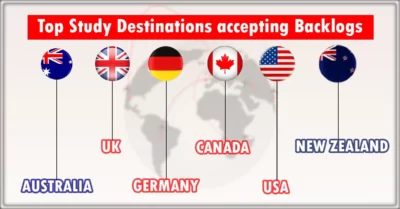
United States:
You May Also Like


The United States is one of the most popular destinations for international students, and many universities in the US accept students with backlogs once they have been cleared. Most US universities require all backlogs to be cleared prior to enrollment (and before issuing Form I-20 for an F-1 visa), while a few institutions may grant conditional admission subject to clearing pending exams before classes start. It’s important to check with the university you’re interested in to see their policies on backlogs.
Canada:
Canada is another top study destination that accepts students with backlogs. IRCC has no fixed statutory backlog cap for study permits, and many universities and colleges in Canada take a holistic approach to admissions, considering academic records alongside work experience and personal statements. However, most public Canadian institutions require backlogs to be cleared before enrollment and typically cap cleared backlogs at 4 to 8 (depending on the program).
Australia:
Australia is a popular destination for international students, and many universities in Australia accept students with backlogs. Under Australia’s Genuine Student (GS) assessment and university admission rules, applicants must generally clear all backlogs to receive an unconditional Confirmation of Enrolment (CoE), with most universities accepting between 4 and 10 cleared backlogs depending on the course.
Germany:
Germany is known for its excellent higher education system, and many universities in Germany accept students with backlogs. German public universities evaluate applications primarily on overall CGPA/percentage, module credit equivalence, and APS certificate verification rather than a strict backlog count—provided your degree is completed and all backlogs are cleared.
United Kingdom:
The United Kingdom is home to some of the world’s most prestigious universities, and many universities in the UK accept students with backlogs. UKVI does not impose a backlog limit for a Student visa; instead, individual universities set their own caps (typically accepting 5 to 12+ cleared backlogs depending on the institution and degree classification).
New Zealand:
New Zealand has a flexible approach towards academic records and may consider other factors such as work experience, extracurricular activities, and a recommendation letter (LOR) in addition to academic performance, generally accepting 4 to 8 cleared backlogs across universities and polytechnics.
Overall, having backlogs does not have to be a barrier to studying abroad. Many top study destinations accept students with cleared backlogs, providing them with the opportunity to pursue their academic goals and gain valuable international experience.
Do Backlogs Affect Study Abroad? Yes, primarily at the university admissions stage, but there are top study destinations that accept students with backlogs. Ready to pursue your dream of studying abroad, even with academic backlogs? Look no further! Transglobal can help you complete the study abroad process from university and course selection to visa approval.
Contact Transglobal Overseas today to explore your options and take the first step toward your future!
Overcoming Backlogs
Having backlogs can be a major setback for students who want to study abroad, but it’s not necessarily the end of the road. Here are some strategies for overcoming backlogs and getting back on track:
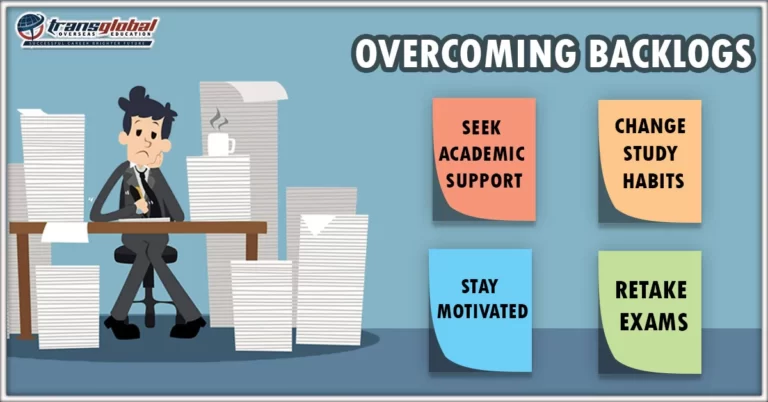
- Seek academic support: Many universities offer academic support services such as tutoring, study groups, and writing centers. Take advantage of these resources to get the help you need to succeed.
- Change study habits: If you find that your current study habits are not effective, it’s time to make some changes. Try different methods such as active learning, taking breaks, or using flashcards to help you retain information better.
- Retake exams: Clear any active backlogs as early as possible—almost all foreign universities require a completed degree/transcript with zero active backlogs before issuing an unconditional offer letter.
- Stay motivated: It can be easy to lose motivation when faced with setbacks, but it’s important to stay focused on your goals. Remind yourself why you want to study abroad and use that as motivation to overcome your backlogs.
Remember, backlogs don’t have to be a permanent obstacle. With the right strategies and mindset, you can overcome them and pursue your dreams of studying abroad.
The Importance of Planning Ahead
Planning ahead is essential when considering studying abroad. It is important to start planning early, as the process can be time-consuming and complex. Students should research their options and explore different universities and programs. This will help them find a program that aligns with their academic and career goals.
It is also important to consider the financial aspect of studying abroad, as it can be expensive. Students should research scholarships and other forms of financial aid like education loans for abroad studies that they may be eligible for.
Backlogs and Planning
backlogs can have a significant impact on a student’s plans to study abroad. It is important to clear any backlogs before applying to universities abroad. Many universities have minimum academic requirements and count total backlog attempts (not just failed subjects) that must be met, and active backlogs can prevent students from meeting these requirements.
Additionally, some highly competitive universities may not accept students with multiple backlogs. It is important to ensure that your academic record is in good standing before applying to universities abroad.
Tips for Planning Ahead
Here are some tips to help students plan ahead when considering studying abroad:
- Start planning early: The earlier you start planning, the better. This will give you more time to research your options and explore different universities and programs.
- Research scholarships and financial aid: Studying abroad can be expensive, so it is important to research scholarships and other forms of financial aid that you may be eligible for.
- Clear any backlogs: It is important to clear any backlogs before applying to universities abroad and keep your final marksheets/re-attempt transcripts ready.
- Consider the cultural and social aspects: Studying abroad is not just about academics, it is also about experiencing a new culture and making new friends. Consider the cultural and social aspects of studying abroad when researching universities and programs.
What to do if you have a backlog?
Here is what you can do if you have a backlog:
- Evaluate the situation: Analyze the cause of the backlog and how it can be avoided in the future.
Speak with the professor or counselor: Discuss the situation with the professor or counselor to gain clarity on how to proceed. - Make a plan: Create a plan of action that outlines what needs to be done to clear the backlog.
- Prioritize: Prioritize the backlog according to the exam schedule and difficulty level.
- Revise and practice: Start revising the subject matter that caused the backlog and practice problems regularly.
- Stay motivated: Stay motivated and avoid procrastination, and make use of study groups, tutoring, and academic support services.
- Take advantage of reappearing opportunities: If you have the opportunity to reappear for the exam, make use of it.
- Focus on other aspects: Balance your academics with other aspects of your life such as extracurricular activities, hobbies, and work experience.
Remember that getting a backlog is not the end of the world. With the right attitude, planning, and effort, you can overcome it and continue on your path toward studying abroad.
If you’re wondering Do Backlogs Affect Study Abroad, don’t worry! As an Abroad Education Consultant, Transglobal Overseas can help you navigate this process and find the best options.
Conclusion for Do Backlogs Affect Study Abroad
Having backlogs may seem like a major obstacle to studying abroad, but it does not have to be the end of the road. With proper planning, proactive steps, and a positive attitude, students can overcome academic challenges and achieve their dream of studying abroad.
It is essential to stay focused, motivated, and organized, as well as seek support from academic advisors and resources available on campus. Studying abroad can be a life-changing experience that opens up new opportunities and expands one’s horizons. With determination and hard work, students can turn their dream into reality, even with backlogs.
Don’t let backlogs affect your Study abroad dreams. Get in touch with Transglobal Overseas today to know more about how to get admission to top study destination accepting backlogs.
Frequently Asked Questions
1. Do backlogs make it impossible to study abroad?
Backlogs do not make it impossible to study abroad. However, you must generally clear all active backlogs before enrollment, as universities have minimum academic requirements and backlog caps that vary by program.
2. How do backlogs affect studying abroad eligibility?
Backlogs affect eligibility for studying abroad as they reflect a student’s academic performance. Some universities require a minimum GPA/percentage and count every re-attempt toward their maximum backlog limit, so it is best to check each university’s admission criteria.
3. Should a student still consider abroad if they have backlogs?
Yes, a student should still consider studying abroad if they have backlogs. While it may affect eligibility for top-tier or highly selective universities, many accredited universities and colleges accept cleared backlogs, especially when offset by strong test scores or work experience.
4. How can a student plan ahead avoid backlogs affecting study abroad?
Planning ahead is crucial to avoid backlogs jeopardizing a student’s desire to study abroad. Students should prioritize clearing pending exams early, maintain consolidated marksheets showing cleared subjects, and seek guidance from professors and academic advisors.
5. Which country has the most strict policy for accepting students with backlogs?
No country sets a nationwide government ban on backlogs, as policies vary by university and program. However, public universities in Canada, Germany, and top-ranked institutions in the United States and the United Kingdom generally enforce stricter academic and backlog thresholds.
6. Do backlogs matter in the visa process?
Major immigration authorities—including IRCC (Canada), UKVI (UK), the U.S. Department of State (USA), and the Department of Home Affairs (Australia)—do not have an official backlog limit for student visas. However, visa officers evaluate whether you are a genuine student capable of completing your program, alongside your financial proof and ties to your home country.
7. Should I mention backlogs in SOP?
It is not necessary to highlight backlogs in the SOP (Statement of Purpose) unless the university or visa officer (for example, in an Australian Genuine Student statement or Canadian Letter of Explanation) asks for an academic explanation. If mentioned, briefly explain the reason and show how you cleared the exams and improved academically.
8. What is the Difference Between Backlog and Absenteeism?
Backlogs are different from absenteeism. Absenteeism refers to the situation where a student misses classes without prior notice or valid reasons. Backlogs, on the other hand, refer to courses that a student has attempted (or missed in an exam) and failed to clear. While both can negatively impact a student’s academic record, backlogs can be remedied by re-taking the exam and clearing it.
9. How to Enhance Student Profile if you have Backlogs?
While backlogs may not necessarily disqualify you from studying abroad, they can negatively impact your application. To enhance your student profile, clear all pending exams early, pursue relevant internships or work experience, achieve strong scores on standardized/language tests (IELTS/PTE/GRE/GMAT), obtain strong recommendation letters, and write a compelling statement of purpose.
10. Maximum Number of Backlogs Allowed for Studying Abroad?
The number of backlogs allowed for studying abroad varies from university to university and country to country. Generally, most universities have a limit on the number of cleared backlogs a student can have before becoming ineligible for admission—typically ranging from 1 to 8 for competitive universities and up to 10–12 at more flexible institutions. Therefore, it is important to research the specific requirements of your target universities before applying.